

Whether you’re a first-time homeowner ready to fit out your brand-new workshop with power tools for future projects or a seasoned pro looking to tackle backyard metalwork or more advanced DIY renovations and repairs, you may need a cutting tool. Online searches will likely point you to angle grinders and cut-off tools.
They may look similar, but they’re not interchangeable, and each has its place in your tool bag depending on the task. Not sure which is right for you? Read on to learn more about how each tool functions and how to choose the correct tool for your project.
What Is a Cut-Off Tool?
The narrow-bodied cut-off tool serves as a workshop’s specialty power cutting device. Its compact footprint, smaller cutting wheels (usually 3″–4″ in diameter), and one-handed operation means they can reach tighter spaces and are great for detail work. But they’re designed for cutting only, so for grinding, polishing, and sanding, you’ll need to reach for another tool. (That’s where angle grinders come in—more on those below.)
Cut-off tool operation is fairly straightforward: Just attach a cutting wheel under the safety guard and press the trigger button. Because they perform a single function, some cut-off tools spin at 20,000 rpm and have brushless motors with higher torque, so they’re super efficient at cutting through various materials. Cut-off tools are primarily used for:
- Automotive work (exhausts, body panels)
- Sheet metal
- Cutting nails, bolts, rods, rebar
With the proper specialty cutting disc, you can also cut through drywall, concrete, and tile, though you’ll want to be extra careful to protect yourself from the dust these materials produce.
So when should you reach for a cut-off tool? Removing rusty bolts on your mower blade is an ideal scenario for cut-off tool utility. While you could use a socket wrench, penetrant spray, and elbow grease, the cut-off tool can shave rusty bolts and a few minutes off your annual lawn equipment maintenance to-dos.
Now, if that to-do list includes sharpening and cleaning rust off your mower blades, you’ll need to put down the cut-off tool and pick up an angle grinder.
What Is an Angle Grinder?
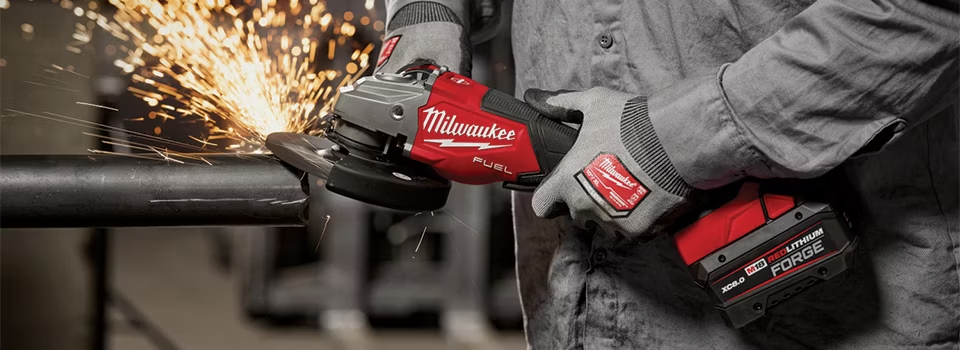
Larger and more versatile than their cut-off tool cousins, angle grinders are the powered multitool of your workshop. They have a side handle for two-handed operation and can be outfitted with larger wheels (typically 4.5″–7″ in diameter).
With more disc options, multipurpose angle grinders can do more than cut through masonry, metal, and tile. With the right wheel, they can also grind down, polish, and sand to prep surfaces for painting or other treatments.
Because angle grinders are larger and heavier and generally pack more power at lower rpm than cut-off tools, they are ideal for the toughest jobs. Opt for an angle grinder when you need to:
- Cut pavers
- Grind welds
- Clean rust or paint from metal
An angle grinder can also replace several tools for woodworking projects to take on tedious sanding and polishing.
When it’s time to remove rust from your mower blades to sharpen them for the season, the angle grinder can speed up both tasks. Grind off rust with a grinding disc and swap it out for a flap wheel when you’re ready for sharpening.
Cut-off Tool vs. Angle Grinder: Comparison Table
| Cut-off Tool | Angle Grinder | |
| Size | Smaller, narrow body | Larger |
| Wheel/Disc Size (diameter) | 3”-4” | 4.5”-7” |
| Function | Cutting only | Cutting, grinding, sanding, polishing, surface prep, sharpening |
| Power | Lower for precision jobs | Higher for heavier-duty jobs |
| Use Cases | Automotive; sheet metal; cutting nails, bolts, rods, and rebar; cutting tile | Cutting pavers, grinding welds, cleaning rust or paint from metal surfaces, woodworking (polishing and sanding) |
| Precision | Yes | No |
| Beginner Friendly | Yes: lighter weight and easier to maneuver | No: better for more advanced users |
| Side Handle | No | Yes |
| Price Point | Lower price, smaller range of price points | Wider range of price points, more investment |
When Should You Use a Cut-Off Tool?
When your project requires precision cuts or working in tight spaces, choose the narrower, more compact cut-off tool. Its one-handed operation makes it easier to maneuver in corners or other areas the side handle of an angle grinder can’t navigate. It’s best for light-duty projects where you need control over power, and for homeowners working on small repair jobs or cutting fasteners or sheet metal.
When Should You Use an Angle Grinder?
Choose the larger, more powerful angle grinder for versatility or when you need a tool with heavy-duty capabilities. Its many wheel options can help shave time off tedious sanding and polishing jobs for large areas and for paint-removal tasks. Use it to grind masonry or metal instead of a bench grinder when your tool needs to reach your workpiece rather than bringing your workpiece to your grinding tool. For repeated or rougher material removal, the angle grinder is the more efficient choice.
Safety Tips for Using Cut-Off Tools and Angle Grinders
No matter which cutting or grinding tool your job calls for, safety gear is a must. Sparks and dust fly, and if too much force is applied, a disc can shatter, causing sharp disc pieces to fly off at high speeds, creating a dangerous situation. Here are some tips to help ensure safe operation of your cut-off tool or angle grinder.
- Wear full safety gear: Always use safety glasses or a face shield, gloves, and hearing protection. Sparks and shards are unavoidable.
- Avoid cutting wood or drywall: Neither tool is designed for these materials. Instead, use saws to cut them to avoid damaging the disc or tool.
- Use the right disc: Don’t use grinding or polishing discs on cut-off tools, as they are meant for cutting only. Always match the rpm rating and material type, and make sure to choose a wheel with the correct diameter for your specific tool.
- Let the tool do the work: For both tools, apply light pressure, using your hands to guide the tool for cutting or grinding. Forcing a cut can shatter the disc or send the tool off-course, and too much pressure with a grinding disc can gouge metal.
- Test-run your wheel: Before beginning a new cutting or grinding task, check battery levels on cordless tools and run the disc for about a minute to be sure it’s running smoothly. Replace the disc if it appears bent or otherwise damaged.
- Remove flammable materials from your workspace: When sparks fly, be sure flammable and potentially ignitable or explosive materials (paper, compressed gas, solvents) are safely stored and out of your way.
Choosing the Right Tool for Your Home Projects
Still not sure which tool is right for your project? Before you choose one or the other (or an angle grinder and a cut-off tool if you need both precision and power), ask yourself some project-specific questions, and check the chart above to make sure you’ve got the right one for the job:
- What material are you cutting?
- Do you need grinding or sanding capabilities, or cutting only?
- If only cutting, how precise do the cuts need to be?
- Is portability or power more important?
- How much are you willing to spend?
If you already have cordless power tools from a particular brand, choosing a cut-off tool or angle grinder that aligns with your current system’s make and voltage can allow you share standard batteries among them so you can charge one with less downtime. Do it Best carries cut-off tools and angle grinders from trusted brands like Milwaukee, Dewalt, and Makita that will easily integrate with your current tools.
If cost is a consideration, remember that a less expensive tool may not work for your needs. Grinders tend to be more expensive due to their versatility, power, and larger size, and cut-off tools tend to be less expensive and more precise but don’t offer the multipurpose capability of an angle grinder. Before you buy, think about the job you’re doing and how often you’ll use the tool. Investing in the best tool you can afford for the projects you’ll tackle today and down the road. Whether you need an angle grinder or a cut-off tool, Do it Best offers high-quality tools for beginners and professionals.
Shop Cut-Off Tools & Angle Grinders at Do it Best
Both angle grinders and cut-off tools have a place in your home workshop, but because they’re not interchangeable, be sure to choose the right one for your project. For basic home projects that require precise cutting, opt for a cut-off tool. For larger projects that need heavy-duty work or versatility that don’t just cut but can grind and sand, go with an angle grinder. Choosing wisely will prevent headaches, safety risks, and poor results.
Find a cut-off tool or angle grinder at your local Do it Best store today or shop online for home delivery.